

Intervertebral disc disease (IVDD) in dogs: signs, treatment and recovery
IVDD, a “slipped disc” in the spine, is common in dachshunds, French bulldogs and other long-backed breeds, and it ranges from a sore back to the sudden loss of the use of the legs. Here at Advanced Vet Care we diagnose it with our own CT scanner and operate in the same building, so this page takes you through the signs, what we do, and what it costs.
Book an appointment →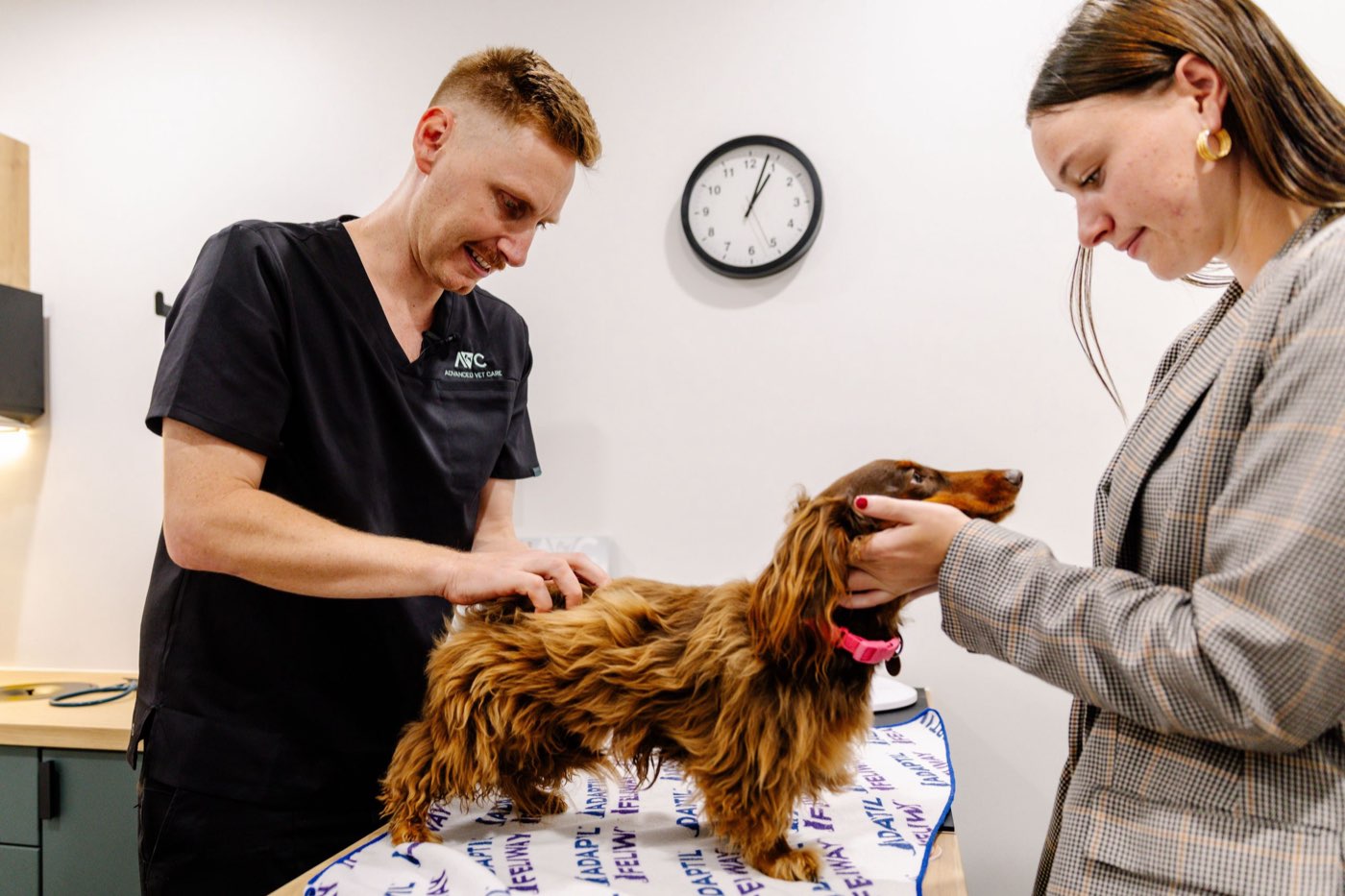
The short answer
- IVDD is a disc in the spine bulging or rupturing and pressing on the spinal cord, and we can scan for it and operate on it here.
- Most common in dachshunds, French bulldogs, beagles and other long-backed breeds.
- It ranges from back pain and reluctance to jump, through to wobbly, dragging or paralysed back legs. When the disc is in the neck, the front legs can be affected as well.
- Sudden loss of the use of the back legs is an emergency, and the sooner it is treated, the better the outcome.
What is IVDD?
The discs between the bones of the spine act as cushions. In intervertebral disc disease, a disc degenerates and either bulges or ruptures, pushing up against the spinal cord that runs just above it. That pressure is what causes the pain and, in worse cases, the loss of coordination or movement in the legs.
Some breeds are built for it. Dachshunds, French bulldogs, beagles, corgis and shih tzus have long backs and a disc type that ages early, which is why IVDD shows up in them far more often, sometimes after nothing more than a jump off the couch.
Is it always the back legs?
Most of the time, yes. About 80% of the IVDD cases we see affect the back legs. IVDD can also happen in the neck, in roughly 10 to 20% of cases, and then the front legs can be affected too. So a dog who is suddenly sore in the neck, or unsteady on the front legs, deserves the same urgency.
What are the signs of IVDD?
Signs depend on where the affected disc is and how much pressure there is on the cord. Early on it can look like a dog that's simply “gone off”: quieter, stiffer, not quite themselves.
- A hunched back or neck, yelping when picked up, or reluctance to jump or climb stairs
- A wobbly, unsteady or “drunk” walk in the back legs
- Dragging the back paws, or knuckling over onto the tops of the feet
- When the disc is in the neck, weakness or wobbliness in the front legs as well
- Weakness or trembling, or crying out in pain for no obvious reason
- In severe cases: unable to stand, no movement in the legs, or loss of bladder control
Signs that need us today
- Sudden inability to stand or walk, or legs that give way or drag
- No movement or feeling in the legs, or loss of bladder/bowel control
- Severe, sudden pain that isn't easing
With IVDD the window for the best result can be short, so please do not wait to see whether it settles. Call us on 02 8552 7800, or your nearest emergency vet, straight away.
How is IVDD diagnosed?
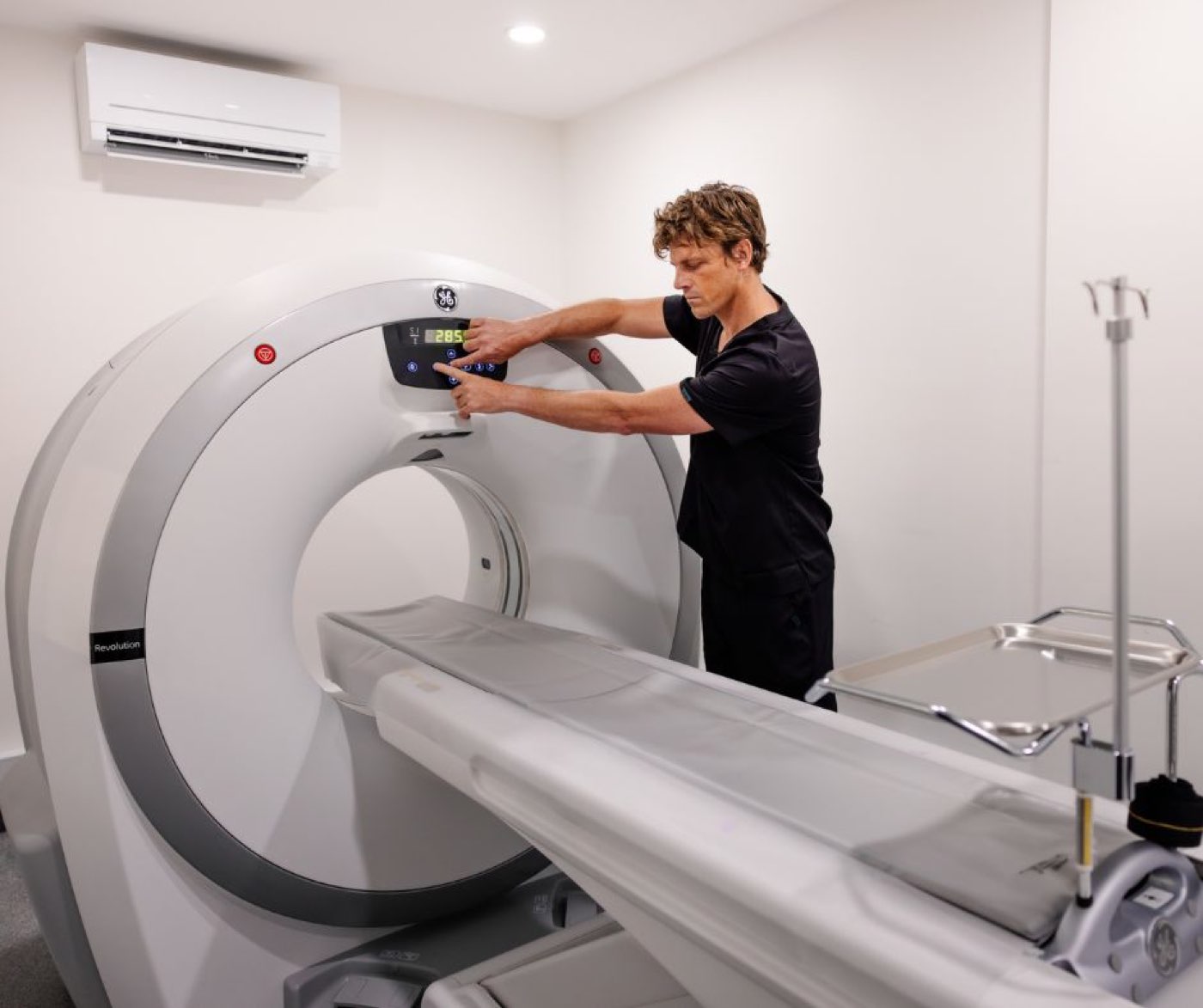
We start with a neurological exam to work out where the problem is and how severe it is. To see the disc itself and plan treatment, advanced imaging is the next step. We have CT here at Advanced Vet Care, which is exactly where having imaging on site earns its keep, because it means no delay in the cases that are racing the clock.
How is IVDD treated?
The right treatment depends on how severe the signs are, and how quickly they came on.
Conservative (medical) management
Milder cases, where there is pain and mild wobbliness but your dog is still walking, often do well with strict rest, pain relief and anti-inflammatories, and a careful gradual return to activity. “Strict rest” really does mean strict; it's the hardest and most important part.
Surgery
When the legs are badly affected, or the signs came on suddenly and are getting worse, surgery to take the pressure off the spinal cord gives the best chance of a good recovery. Timing matters here more than in almost anything else we treat.
What does IVDD treatment cost?
We publish our IVDD prices, because the cost is one of the first things owners want to know and it shouldn't be something you have to ring around for.
| Option | What is included | Price |
|---|---|---|
| X-rays and non-surgical treatment | An initial consultation, X-rays of the spine under sedation, pain relief and anti-inflammatories, and a detailed home recovery plan. | $1,400 |
| Diagnosis and surgery | An initial consultation, a CT scan read by a specialist radiologist, IVDD surgery, and the first 24 hours in hospital after the operation. | $9,000 fixed price |
The $9,000 covers everything in the table above. Any complications, or a stay beyond the first 24 hours, cost extra, and that is talked through with you at the time. There is no direct overnight monitoring at Lane Cove, so where a dog needs it after surgery a transfer is arranged, also at additional cost.
Worried about your dog's back or back legs?
If your dog is wobbly, dragging a paw or suddenly sore, we can see them and tell you quickly whether this is time-critical.
What is recovery like?
Recovery is measured in weeks, not days, and the rest period is the part owners find hardest. Most dogs that still have feeling in their legs when they are treated do well. Physiotherapy and controlled exercise help, and we will set out what that looks like week by week.
How fast a dog is seen changes the outcome
The single thing that changes an IVDD outcome is how fast a dog with sudden back-leg weakness is seen. If you are debating whether it is worth ringing, that is the moment to ring. We would far rather see a dog that turns out to have a simple sore back.
Common questions
Can IVDD be prevented?
Not entirely, because the disc type is inherited. Keeping your dog lean, using ramps instead of jumps, and a harness rather than a neck collar all reduce the load on the spine.
Will my dog walk again?
Many do, particularly when they still have deep pain sensation at the time of treatment. That is one of the first things we check, because it is the best guide to the outlook.
Is IVDD painful?
Yes, often very. Pain relief is part of treatment from the outset, whichever route is taken.
Medically reviewed by Dr Matt Buchanan-Pascall, BVSc, GPCert, GPAdvCert Orthopaedic Surgery · updated October 2026. This guide is general information, not a substitute for examining your individual dog.
…When my little girl Sally suddenly lost her ability to walk and we were told it was IVDD my heart broke…
Kirsty Martin, Google review · 5 stars
A real review, quoted as written. Read our Google reviews →

Medically reviewed by Dr Matt Buchanan-Pascall, BVSc, GPCert, GPAdvCert Orthopaedic Surgery.
Come and see us about your dog's back
We will examine your dog, tell you honestly how urgent it is, and go through every option with you, including what each one costs.
Book an appointment →