

TPLO surgery for dogs: what it is, and what it costs
If you are reading about TPLO, you have probably just been told your dog has torn a cruciate, and it is a lot to take in at once. Here is what the operation involves, what recovery asks of you both, and what it costs.
Book an appointment →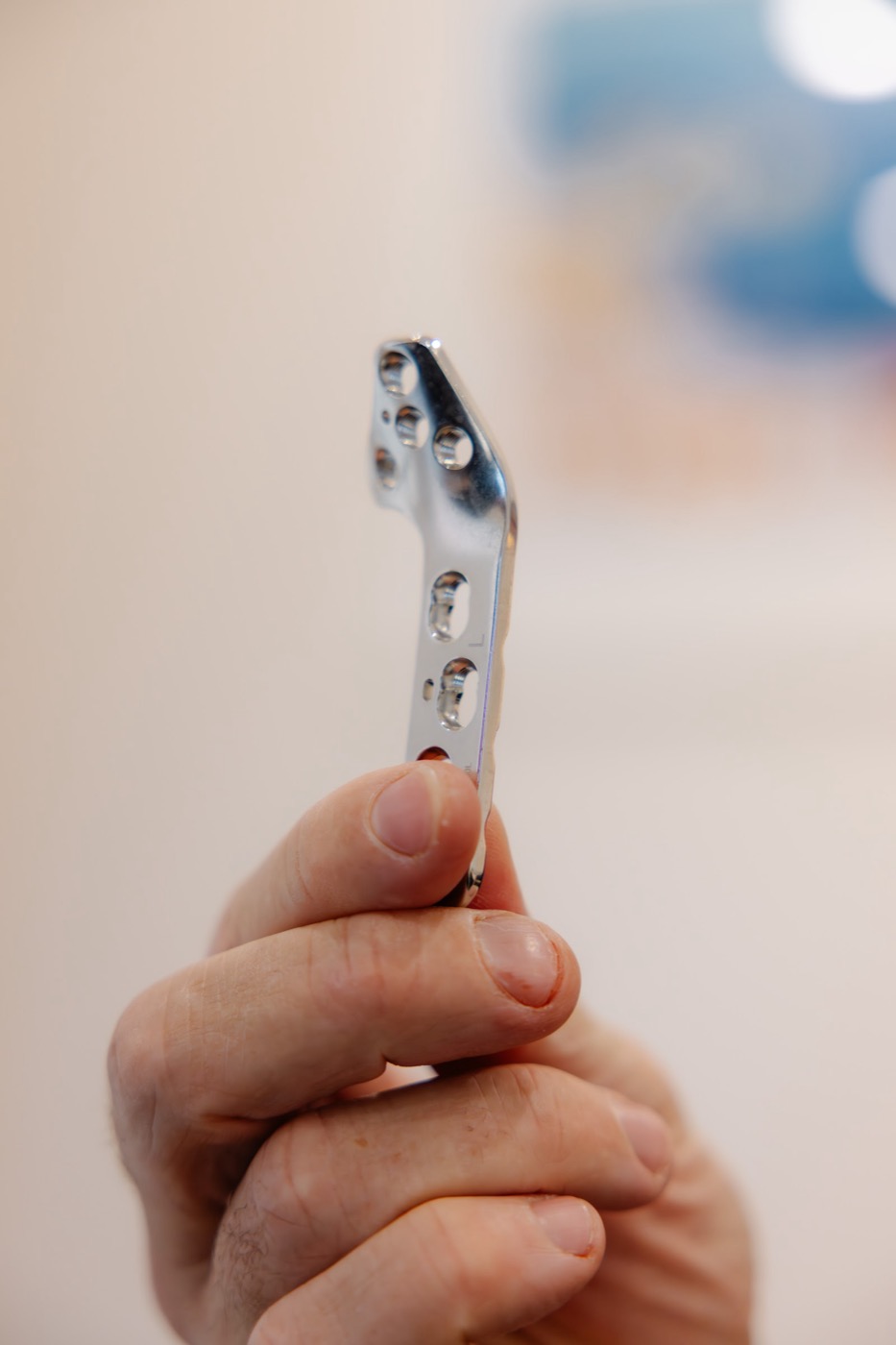
The short answer
A TPLO changes the angle of the top of the shin bone so that the knee is stable again without the torn ligament, and the cut is held with a plate and screws while it heals. We recommend it for every dog over 7kg, which is most of the dogs we see, and it is done here at Advanced Vet Care with the imaging and the surgical team all on site. A TPLO is $5,000, and we will talk the whole plan through with you before anything is decided.
What is a TPLO, in plain terms?
TPLO stands for tibial plateau levelling osteotomy. An osteotomy is a planned cut in a bone.
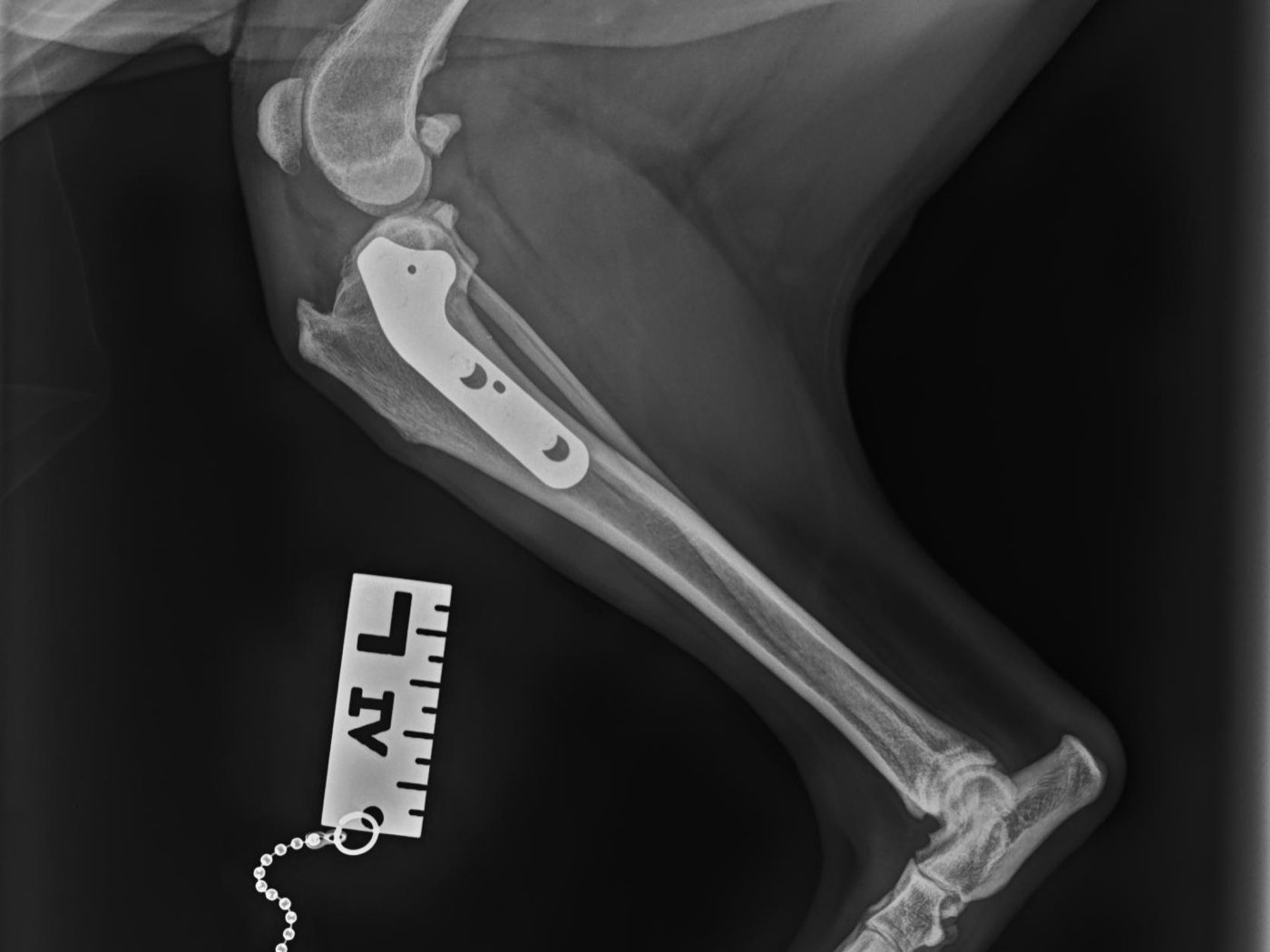
We make a semicircular cut around the top of the shin bone and rotate it to a set position, which makes the knee stable again even without the cruciate ligament, and the cut is then held with a bone plate and screws while it heals.
We do not replace the ligament, and that surprises a lot of people. In humans a torn cruciate is often rebuilt, but in dogs that has not worked well, so we change the shape of the joint instead and the ligament is simply no longer needed. Once the bone has healed the plate has done its job, and it usually stays quietly where it is for the rest of your dog's life.
Why an osteotomy rather than a suture?
Because of what each one asks the knee to do.
The lateral suture
A lateral suture, sometimes called the fishing line technique, places a heavy suture outside the joint where the cruciate used to sit, and the body then lays scar tissue around the knee to steady it. It is a well established operation and for plenty of dogs it is exactly the right one.
We still do lateral sutures for small dogs under 7kg. It does have limits, though, and we would much rather you heard them from us than found them later. The suture can fail, and arthritis can still build up over time, which is why we don't recommend it for bigger dogs.
The osteotomy
An osteotomy takes a different route altogether. Changing the angle of the joint takes the instability out of every single step, rather than holding the knee steady from outside it. For large and active dogs the results are more consistent, even in very athletic patients, and less arthritis tends to form afterwards.
This is not simply our preference. Compared head to head against a lateral suture, dogs who had a TPLO used the leg better and their owners were happier a year on. Dogs in both groups improved, so a suture is by no means a failed operation, and we will happily recommend one where it suits your dog. TPLO simply came out ahead, and the research is clear that it generally leads to less arthritis in the long term.
Is TPLO right for every dog?
Not every dog, but most. Size is what decides it. For small dogs under 7kg we still do a lateral suture. Most of the dogs we see are over 7kg, and for all of those we recommend a TPLO.
In practically every case, we recommend surgery. It is the only way to permanently control the instability in the knee. Pain relief on its own will not fix it, because while the knee stays unstable the pain keeps coming back.
Every plan is built for the individual dog, after we have examined the knee and looked at the films together, and we will talk all of it through with you and answer any questions before anything at all is booked.
What does the surgery involve here?
We have CT and an orthopaedic surgical team here, we are open seven days, and you do not need a referral to see us. In practice that means the examination, the radiographs we use to plan the cut, the operation itself and all of the follow-up happen in this building, with the same team looking after your dog throughout. You will not need a referral to start, and you are welcome to simply come and talk to us.
What happens when we examine the knee
Pre-op X-rays are always taken under a general anaesthetic. That lets us do the two hands-on tests for a torn cruciate, the tibial thrust and the cranial drawer, which check how much the shin bone moves under the knee. Many dogs won't tolerate them while they are awake.
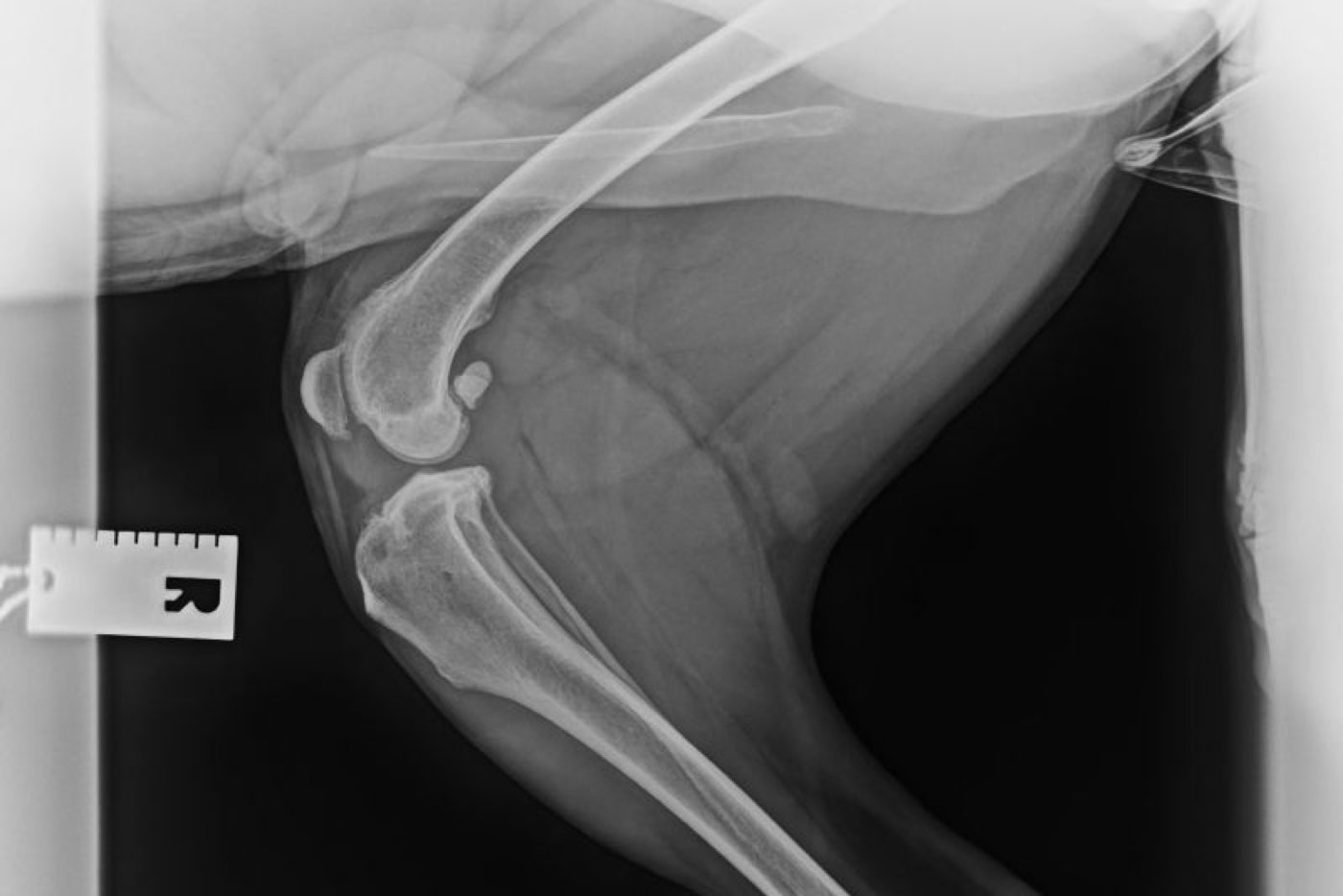
A TPLO is also planned off a measurement taken from those X-rays. On them we look for inflammation in the knee and check how much arthritis is already there. Arthritis is very common in these dogs, because cruciate disease is usually a chronic problem rather than a sudden injury.
We always assess the hips for dysplasia or arthritis as well, at no extra cost. The hips can affect the long-term outcome, and how we plan your dog's recovery and rehab.
We don't usually use CT for cruciate disease, because the ligament doesn't show up well on CT. If a dog is lame and we're not convinced it's a cruciate tear, we'll investigate further.
The meniscus
The meniscus is the cartilage-like pad between the thigh and shin bones that absorbs shock and spreads load, and about 30 to 40% of dogs with a torn cruciate have torn it too. A tear doesn't show on X-rays and you can't always feel a click. Sometimes it is obvious on examination, but often it isn't.
So every time we operate, we go into the knee joint. We remove the torn cruciate fragments, because they are a source of inflammation, and we check the meniscus. If it is torn, we remove the damaged section at the same time, at no extra cost.
What does a TPLO cost?
A TPLO is $5,000, and a lateral suture for a small dog is $4,000. Those prices are straightforward and upfront. The only exception is giant dogs over 70kg, which cost about $800 more, and we see very few of them.
Whether pet insurance covers it depends on the provider. Where it is covered, most pay around $2,500, but we always recommend checking your own policy.
…My sweet Ernie had TPLO surgery done by Dr. Matt and his surgery and recovery has been better than what I could have dreamed of…
Alexandra Hodges, Google review · 5 stars
A real review, quoted as written. Read our Google reviews →
What is recovery actually like?
This is the part worth planning your life around, and honestly the part most of us underestimate. We will go through it with you well before the day, so that nothing about it comes as a surprise.
Rest, and plenty of it
The care your dog gets at home is what decides the result, and that part belongs to you. Activity has to be restricted for several weeks after surgery, because the implants and the healing bone can otherwise be put at risk. In practice that means confinement, lead-only toileting, no stairs, no couch and no games, and we know how long those weeks can feel.
If you have a young dog and nowhere obvious to confine them, that is a very common problem and one we would love to hear about at that first appointment, so we can help you work out something that actually fits your house.
Rehabilitation
Rehabilitation genuinely earns its place. It speeds a dog's recovery up and improves the final result whichever surgery was done, and it starts straight after the operation, with passive range of motion, balance work and controlled lead walks.
We guide you through it step by step. We see your dog every week for the first four weeks after surgery, then again at week eight.
What can go wrong
Every technique carries risks, and we would always rather you heard them from us. Overall there is about a 10 to 15% chance of complications. They include infection, implant breakage, bone fracture, a meniscal tear, continued lameness, arthritis progressing, and muscle loss. During surgery, one possibility is a bleed from one of the large blood vessels behind the knee. We will talk you through how we work to keep each of those as unlikely as we can.
How well does it work?
Well. Surgical repair of cruciate disease brings significant improvement in somewhere between eight and nine dogs in every ten. That figure covers surgical repair of cruciate disease in general rather than TPLO on its own. Arthritis can still progress whatever is done, though it tends to progress more slowly after surgery than with medical management alone.
One thing worth knowing before it happens rather than after: up to half of dogs diagnosed with cruciate disease in one knee go on to develop it in the other, usually within twelve to eighteen months of the diagnosis. That is not a complication of the surgery, it is simply what the disease does, and keeping your dog lean and fit afterwards is the part you can genuinely influence. We will help you with that side of it too.
Why we would rather not wait to see whether a partial tear settles
The single most useful thing on this page is that a cruciate rupture is usually not an accident, and so it is very rarely anything you could have prevented. It is the end of a slow, quiet degeneration of the ligament rather than a sudden injury to a healthy one, which is genuinely rare. Partial tears are common in dogs and they almost always become full tears over time.
So the limp that came good after a week has not really resolved the problem, and the months spent waiting are months the knee spends unstable, wearing the meniscus and building arthritis. That is why we would love to have a look at it early.
Book an appointment →Where to read next
This page is about the operation. You may also find these useful:
- Disc disease (IVDD) in dogs: the other orthopaedic and neurological problem we most often see, and the one most often mistaken for a leg injury.
- Finding us in Lane Cove: directions, parking and opening hours.
Common questions
Does my dog definitely need a TPLO?
If your dog is over 7kg, that is what we will almost always recommend. For small dogs under 7kg we usually do a lateral suture instead.
Do I need a referral?
No, you do not. You are welcome to book an appointment with us directly, and we are happy to talk it through on the phone first if that is easier.
Does the plate come out afterwards?
Usually not. Once the bone has healed the plate and screws are no longer needed, and they are rarely removed unless there is a specific problem such as irritation or infection.
Will the other knee go too?
Often, yes, and that is the disease rather than anything to do with the surgery. Up to half of dogs diagnosed in one knee develop the same problem in the other, usually within twelve to eighteen months. Keeping your dog lean and fit is the part that is genuinely in your hands, and we can help you with it.
Can a cruciate tear heal with rest?
Unfortunately not. The instability does not resolve on its own, and surgery is the only way to control it permanently. In practically every case, we recommend surgery.
Do cats get this?
Rarely. Cruciate disease affects dogs of all sizes, breeds and ages, but it is uncommon in cats.
References
Our approach to cruciate disease follows the standards of the American College of Veterinary Surgeons.
- American College of Veterinary Surgeons – Cranial Cruciate Ligament Disease – what each technique involves, diagnosis, complications, recovery and outcomes.
- Gordon-Evans et al. (2013), Journal of the American Veterinary Medical Association – a randomised, blinded controlled trial of 80 dogs comparing TPLO with a lateral fabellar suture.
Medically reviewed by Dr Matt Buchanan-Pascall, BVSc, GPCert, GPAdvCert Orthopaedic Surgery · updated October 2026. This page is general information about a surgical procedure, not a quote and not a substitute for examining your individual dog.
Have that knee looked at
We will examine the knee, tell you honestly which surgery fits your dog and what it costs, and talk the whole plan through before anything at all is booked. You can reach us on 02 8552 7800 or book online, whichever is easier for you.
Book an appointment →